
 Hachi is a movie based on the true story about a dog in Japan, Hachiko, who would wait at the train station every day for his owner to arrive even after the owner passed away.
I have never seen the original Japanese version of the movie but know the story well as I have been told by many people here in Japan. There is a statue of Hachiko that stands outside of Shibuya Station in Tokyo. Now the statue is the most popular place for Tokyoites to meet their friends before going out shopping or dining in Shibuya.
Unlike other Japanese remakes, this movie actually gives credit to the original story so that you don't get the sense that Hollywood wants to call it its own. All actors/actresses in the movie do a superb job in making you feel as if you were a part of the community embracing the dog. Compared to the original story, people were more accepting of Hachi rather than considering him a nuisance. Of course this is going to be released soon here in the Philippines as the goal is to make it uplifting.
Just a warning, do take many tissues. I can honestly say that I have never really cried since I have homestay theater. I think the score of the movie plus the dog being so adorable made me lose myself. When I looked around myself just alone in the office of my dad, I cried alone in the darkroom. Any movie that can make me do that deserves a 10/10.
Hachi is a movie based on the true story about a dog in Japan, Hachiko, who would wait at the train station every day for his owner to arrive even after the owner passed away.
I have never seen the original Japanese version of the movie but know the story well as I have been told by many people here in Japan. There is a statue of Hachiko that stands outside of Shibuya Station in Tokyo. Now the statue is the most popular place for Tokyoites to meet their friends before going out shopping or dining in Shibuya.
Unlike other Japanese remakes, this movie actually gives credit to the original story so that you don't get the sense that Hollywood wants to call it its own. All actors/actresses in the movie do a superb job in making you feel as if you were a part of the community embracing the dog. Compared to the original story, people were more accepting of Hachi rather than considering him a nuisance. Of course this is going to be released soon here in the Philippines as the goal is to make it uplifting.
Just a warning, do take many tissues. I can honestly say that I have never really cried since I have homestay theater. I think the score of the movie plus the dog being so adorable made me lose myself. When I looked around myself just alone in the office of my dad, I cried alone in the darkroom. Any movie that can make me do that deserves a 10/10.
Showing posts with label Movie Review. Show all posts
Showing posts with label Movie Review. Show all posts
Critic Review: Hachiko: A Dog's Story
Hachi is a movie based on the true story about a dog in Japan, Hachiko, who would wait at the train station every day for his owner to arrive even after the owner passed away.
I have never seen the original Japanese version of the movie but know the story well as I have been told by many people here in Japan. There is a statue of Hachiko that stands outside of Shibuya Station in Tokyo. Now the statue is the most popular place for Tokyoites to meet their friends before going out shopping or dining in Shibuya.
Unlike other Japanese remakes, this movie actually gives credit to the original story so that you don't get the sense that Hollywood wants to call it its own. All actors/actresses in the movie do a superb job in making you feel as if you were a part of the community embracing the dog. Compared to the original story, people were more accepting of Hachi rather than considering him a nuisance. Of course this is going to be released soon here in the Philippines as the goal is to make it uplifting.
Just a warning, do take many tissues. I can honestly say that I have never really cried since I have homestay theater. I think the score of the movie plus the dog being so adorable made me lose myself. When I looked around myself just alone in the office of my dad, I cried alone in the darkroom. Any movie that can make me do that deserves a 10/10.
Critic Review: AVATAR
 I was lucky enough to get tickets to see this in 3D last night - and boy, am I glad I did. Avatar was... just, amazing. I can't think of a word good enough to give it the credit it deserves.
What I thought was extraordinarily brilliant about this film was the way it made me genuinely dislike aspects of human beings - our ignorance being one of them. The humans in this film assume they know better, assume the Na'vi are inferior because they behave differently to us, which really does echo the truth. Which saddens me to think about. I found myself approaching tears a number of times throughout the film, which is weird because I'm usually very hardy when it comes to things like that. The experience was so vivid, so intense and so unbelievably real, I just couldn't help but get completely sucked into it. Even the Na'vi - these huge, blue, glowing humanoids - the more I watched them, the less alien they seemed, the more.. human they became, the more pleasing to the eye. Just amazing.
There was a line in this film that struck chords for me - "They killed their Mother Earth.. now they're here to kill yours." The killing of spirituality and nature is an evil I have always hated about my own race, and I really hope this film acts as a realisation to others who perhaps have never properly thought about it before. I don't want to say too much - nor create a spoiler in any way - but I'll say, there are parts of this film that shows a real destruction of a beautiful world, and I literally had to hold my hand to my mouth. In fact, a number of times I surfaced from my stupor and found my mouth gaping, along with my sister and all the rows of people next to me.
This isn't just a film, this is an experience. You just have to see it. Beautiful, breathtaking, and nothing like you've seen before.
I was lucky enough to get tickets to see this in 3D last night - and boy, am I glad I did. Avatar was... just, amazing. I can't think of a word good enough to give it the credit it deserves.
What I thought was extraordinarily brilliant about this film was the way it made me genuinely dislike aspects of human beings - our ignorance being one of them. The humans in this film assume they know better, assume the Na'vi are inferior because they behave differently to us, which really does echo the truth. Which saddens me to think about. I found myself approaching tears a number of times throughout the film, which is weird because I'm usually very hardy when it comes to things like that. The experience was so vivid, so intense and so unbelievably real, I just couldn't help but get completely sucked into it. Even the Na'vi - these huge, blue, glowing humanoids - the more I watched them, the less alien they seemed, the more.. human they became, the more pleasing to the eye. Just amazing.
There was a line in this film that struck chords for me - "They killed their Mother Earth.. now they're here to kill yours." The killing of spirituality and nature is an evil I have always hated about my own race, and I really hope this film acts as a realisation to others who perhaps have never properly thought about it before. I don't want to say too much - nor create a spoiler in any way - but I'll say, there are parts of this film that shows a real destruction of a beautiful world, and I literally had to hold my hand to my mouth. In fact, a number of times I surfaced from my stupor and found my mouth gaping, along with my sister and all the rows of people next to me.
This isn't just a film, this is an experience. You just have to see it. Beautiful, breathtaking, and nothing like you've seen before.
Critic Review: Ninja Assassin
 For centuries, the ninja has been haunting the shadows, and have been the most dreaded assassins that have survived throughout history. Our story centers upon Raizo, a wayward ninja who met an international police agent named Mika who has been investigating the existence of these assassins. And then, after a while, in the middle of the movie you get lost in where the original storyline is going. You realize that you're just there to see some martial arts.
Almost too self-explanatory, NINJA ASSASSIN is a martial arts movie involving ninjas, and is set in the real world. This is produced by Andy and Larry Wachowski (better known as the Wachowski Brothers) who created the iconic Matrix universe, and is directed by James McTeiguie, director of V for Vendetta (also produced by the Wachowski brothers. Ninja Assassin has that 80's corny style of an action movie that focuses more on the action, the incredibility and the exaggeration of the violence, and a laughably lame back story. And that is the reason why I love this movie.
In order to really enjoy this, you should have a love for B-movie ninja flicks (like "Way of the Ninja" or "American Ninja"). McTeguie tends to be a more mellow version of Tarantino when he works on movies like this; in a sense that while Tarantino loves to pay homage to classic action movies and emphasizes on the more stylistic and the more absurd aspects in order to create a semi-comedic effect that amuses its audience with some element of quirkiness, McTeguie, on the other hand, pays homage but does it in a style more adjusted to today's audience, so much so that it does not look like an homage because it does not wink at you (with exaggerations and jokes) and indicates it as an homage. In this movie, for instance, one may think that it lacks a good plot, or some aspects may be silly, but what you may not easily realize is that all this is intentional because it takes its reference back from the cheesy ninja movies of the 1980s.
Because of the fact that this pays homage to old b-movie ninja movies, it's easier to ignore some of the movie's flaws. Rain's acting, for instance is just plain awful. He is as corny as that shampoo commercial he was in. It's a good thing that he looks great as an action hero. His stances, the way he looks when he's all battered up, bruised, bleeding, and still kicking ass... he has a stunning iconic presence in this movie. That is just it, though, don't let him act a dialogue because it discourages any other future acting career he might have. But on the other hand, I might add that Rain's acting was at least good enough to erase his somewhat effeminate, boyband image on interviews and in other media appearances, note that Rain is a Korean pop star. But as the ninja named Raizo, he does shed off that pop star image and transforms himself into this "manly man" brooding action hero, one which action barbarians can root for.
It was almost such an ecstatic joy to see Sho Kosugi in a ninja role once again. To action junkies and to true ninja movie fanatics out there, you may remember Sho Kosugi as the original 1980's icon for ninja movies. Kosugi was the ninja movie icon, as like Bruce Lee or Jacky Chan was to Kung-fu movies. And I remember him being one of my movie heroes when I was a kid.
NINJA ASSASSIN is one of those movies that you feel is quite a superb action movie and then 30 minutes after you've watched it, the effect runs out and you realize it was not really that much of a great film. There wasn't really anything all too special about the movie. It could have at least added some humor in it to at least give it some more appeal, because for a movie that pays homage to a cheesy genre of film, it was just too serious. Even the hardcore aspect of the characters lacked some hardcore soul. It was like trying to cook the same recipe of the movie 300, but this one seemed like it needed to be brought back to the oven. On the other hand, its shortcomings does not change the fact that it was indeed a worthwhile and entertaining action movie. Visually impressive and is well packaged with action. McTeigue smartly uses his control of motion speed, CGI, and fight choreography in a manner that makes ninja movies of the 80's be revived with today's advances in cinema, and reintroduced to a new breed of action film junkies. Ninja Assassin is an enjoyable movie for action and martial arts junkies. It is certainly not for those who are looking for a serious movie. Because this appeals more to the comicbook, superhero crowd or the film geeks familiar with ninjas. Though it is not destined for greatness, but it sure is worth the money and the time.
I give 8/10
For centuries, the ninja has been haunting the shadows, and have been the most dreaded assassins that have survived throughout history. Our story centers upon Raizo, a wayward ninja who met an international police agent named Mika who has been investigating the existence of these assassins. And then, after a while, in the middle of the movie you get lost in where the original storyline is going. You realize that you're just there to see some martial arts.
Almost too self-explanatory, NINJA ASSASSIN is a martial arts movie involving ninjas, and is set in the real world. This is produced by Andy and Larry Wachowski (better known as the Wachowski Brothers) who created the iconic Matrix universe, and is directed by James McTeiguie, director of V for Vendetta (also produced by the Wachowski brothers. Ninja Assassin has that 80's corny style of an action movie that focuses more on the action, the incredibility and the exaggeration of the violence, and a laughably lame back story. And that is the reason why I love this movie.
In order to really enjoy this, you should have a love for B-movie ninja flicks (like "Way of the Ninja" or "American Ninja"). McTeguie tends to be a more mellow version of Tarantino when he works on movies like this; in a sense that while Tarantino loves to pay homage to classic action movies and emphasizes on the more stylistic and the more absurd aspects in order to create a semi-comedic effect that amuses its audience with some element of quirkiness, McTeguie, on the other hand, pays homage but does it in a style more adjusted to today's audience, so much so that it does not look like an homage because it does not wink at you (with exaggerations and jokes) and indicates it as an homage. In this movie, for instance, one may think that it lacks a good plot, or some aspects may be silly, but what you may not easily realize is that all this is intentional because it takes its reference back from the cheesy ninja movies of the 1980s.
Because of the fact that this pays homage to old b-movie ninja movies, it's easier to ignore some of the movie's flaws. Rain's acting, for instance is just plain awful. He is as corny as that shampoo commercial he was in. It's a good thing that he looks great as an action hero. His stances, the way he looks when he's all battered up, bruised, bleeding, and still kicking ass... he has a stunning iconic presence in this movie. That is just it, though, don't let him act a dialogue because it discourages any other future acting career he might have. But on the other hand, I might add that Rain's acting was at least good enough to erase his somewhat effeminate, boyband image on interviews and in other media appearances, note that Rain is a Korean pop star. But as the ninja named Raizo, he does shed off that pop star image and transforms himself into this "manly man" brooding action hero, one which action barbarians can root for.
It was almost such an ecstatic joy to see Sho Kosugi in a ninja role once again. To action junkies and to true ninja movie fanatics out there, you may remember Sho Kosugi as the original 1980's icon for ninja movies. Kosugi was the ninja movie icon, as like Bruce Lee or Jacky Chan was to Kung-fu movies. And I remember him being one of my movie heroes when I was a kid.
NINJA ASSASSIN is one of those movies that you feel is quite a superb action movie and then 30 minutes after you've watched it, the effect runs out and you realize it was not really that much of a great film. There wasn't really anything all too special about the movie. It could have at least added some humor in it to at least give it some more appeal, because for a movie that pays homage to a cheesy genre of film, it was just too serious. Even the hardcore aspect of the characters lacked some hardcore soul. It was like trying to cook the same recipe of the movie 300, but this one seemed like it needed to be brought back to the oven. On the other hand, its shortcomings does not change the fact that it was indeed a worthwhile and entertaining action movie. Visually impressive and is well packaged with action. McTeigue smartly uses his control of motion speed, CGI, and fight choreography in a manner that makes ninja movies of the 80's be revived with today's advances in cinema, and reintroduced to a new breed of action film junkies. Ninja Assassin is an enjoyable movie for action and martial arts junkies. It is certainly not for those who are looking for a serious movie. Because this appeals more to the comicbook, superhero crowd or the film geeks familiar with ninjas. Though it is not destined for greatness, but it sure is worth the money and the time.
I give 8/10
Critic Review: 2012
 Writer/director Roland Emmerich sacrifices dialogue and depends on an almost comical storyline to wow viewers with mega destruction. Sure the CGI, sound and special effects will sell a lot of popcorn and soft drinks. Even word of mouth will put people in theater seats. Just leave any semblance of real intelligence at the box office, lean back and hold on...and let your eyes feast on the powerful scenes of devastation.
A geologist(Chiwetel Ejiofor)has the facts and figures that prove validity in the ancient Mayan belief that the wold will come to an end in 2012. He at first will have trouble convincing the President's(Danny Glover)people of the pending doom; but a novelist(John Cusack), who just so happens to have written a book about the lost Atlantis, is an easier believer...and the story line has him and his family out driving and flying the massive earthquakes and tsunamis. And somehow cell phones periodically still work. The finale is actually clever; and as the story eases into salvation, heroic feats of bravery run from sappy to bittersweet. You do end up thinking you got multiple big bangs for your buck. As for entertainment, I really enjoyed it.
I gave 9/10
Writer/director Roland Emmerich sacrifices dialogue and depends on an almost comical storyline to wow viewers with mega destruction. Sure the CGI, sound and special effects will sell a lot of popcorn and soft drinks. Even word of mouth will put people in theater seats. Just leave any semblance of real intelligence at the box office, lean back and hold on...and let your eyes feast on the powerful scenes of devastation.
A geologist(Chiwetel Ejiofor)has the facts and figures that prove validity in the ancient Mayan belief that the wold will come to an end in 2012. He at first will have trouble convincing the President's(Danny Glover)people of the pending doom; but a novelist(John Cusack), who just so happens to have written a book about the lost Atlantis, is an easier believer...and the story line has him and his family out driving and flying the massive earthquakes and tsunamis. And somehow cell phones periodically still work. The finale is actually clever; and as the story eases into salvation, heroic feats of bravery run from sappy to bittersweet. You do end up thinking you got multiple big bangs for your buck. As for entertainment, I really enjoyed it.
I gave 9/10
***
I just want to post my critic review about the movie that I went. Although, I'm not back yet but I promise that I will be back as a better blogger. :)
Critic Review: G-Force
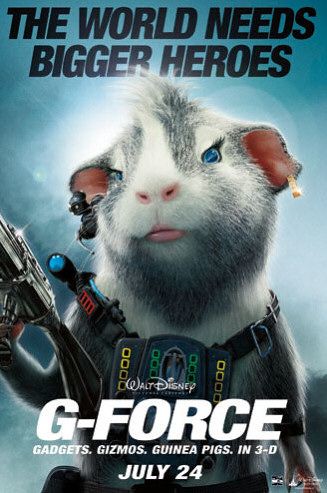 credit to flickr search

Critic Review: In My Life[Filipino Film]
 Went to Robinsons Galleria with three ladies(laxa clan) to watch the new Vilma Santos-starrer "In My Life". After that ordeal, we could only hope the movie is worth it. And thank God it's that good!
 Veteran director Olivia Lamasan and screenwriters Raymond Lee and Senedy Que brings us a gem in Philippine drama: less tears but an absolute tearjerker; close to real life but richly plotted and unpredictable.
Vilma Santos plays the role of Shierly Templo, a sourly librarian suffering from empty nest syndrome, with her daughter Dang (Dimples Romana) planning to move to Australia with her family, and her estranged gay son Mark (Luis Manzano) living in New York. After a fight with Dang, she decides to visit Mark, only to be surprised that he is already living with another man named Noel (John Lloyd Cruz), an illegal immigrant.
In an attempt to win Shirley's approval and affection, Noel patiently chaperones her around the city and attends to her needs. After spending more time with her son's lover, Shirley realizes that she has become emotionally distant from her son and soon becomes jealous of Noel who seems to know Mark better now than her. This gap deepened when Mark, despite Noel's coaxing, refused to tell his mother about his serious medical condition. As he is recovering from his illness, Shirley attempts to repair their relationship and the history of their mother and son relationship unfolds. But a dark cloud looms over them all and things will never be the same again.
For its exceptional casting alone, In My Life is amazing. Vilma aside, my heart goes out to John Lloyd, that rare dramatic actor who can make you cry just by seeing his eyes well up with tears. He portrays a lover quietly suffering Shirley's tantrums with restraint and grace, but at the same time, he makes it heartfelt and sincere.
I was surprised by John Lloyd and Luis' screen dynamic as a gay couple. They call each other as Babe, display very romantic photos in their apartment and as the movie ends, they share a tender kiss on Brooklyn Bridge. Onscreen, their love is sweet, hushed and terribly romantic; even more effective and memorable than most hetero screen pairings. As for John Llyod and Luis being typecast in gay roles or catching social stigma, I have serious doubts about that, for onscreen, they are still as masculine and virile.
As for Vilma, she portrayed a multi-dimensional mother who learns to get off her high horse and deal with displaced motherly pride. Later in the movie, Shirley realizes that that even if she's done everything for her children, she failed to know them as persons. Unlike other mother roles she has done in the past, the Star for All Seasons depicts a flawed mother who eventually finds peace with herself and her past mistakes.
Not to be missed is Shirley and Noel's confrontation wherein the traditional sampalan was reinvented and Noel throws in the lines: "Anak mo lang siya, hindi mo siya pag-aari. Kung ano ang naging siya, dahil 'yon sa mga taong pumaligid sa kanya, at isa ka lang doon." Another highlight of the movie is the dance sequence of Luis with his mother. Currently the Governor of Batangas, Ate Vi has been very vocal in saying that she is passionate about dancing and apparently her son inherited this love as well. The audience is also treated to the amazing sights and landmarks of New York City. With Mark, Shirley, and Noel, the audience experiences a slice of middle class life in the city that never sleeps. In My Life also has witty one-liners and refreshing comic relief in between dramatic moments, effectively delivered by Vice Ganda. We wish he had more exposure in the film.
I give this 5 stars..
Critic Review: Dinig Sana Kita(Filipino Film)

I think it is just right that I do a full review on this movie and will be seeing it again after recommending it to friends. I know that this movie will be released this year, and they should whilst the iron is hot. The movie has great word of mouth popularity and I think that they should not let the heat settle down, they should release it while every one is eager to see it. Almost every screening has been sold out and they have to open up another slot for another screening. IT IS that famous. Plus among the movies in competition this one got its first commercial release late this month.
"Dinig Sana Kita" is a story about a troubled rocker teenager who has issues with his parents and a deaf dancer who is looking for his mother. The two cross each others lives when they first met in a police station. They got to know each other more when both of them attended a sort of summer camp to bridge the differences of deaf/mute people with people with normal speech and hearing that lead to a budding friendship.
This movie proved that you do not have to go all out crying to be that dramatic. Filipino mainstream filmmakers nowadays feel the need to create a tearjerker movie that has lots of actual tears. Something that most poignant moments are those well executed scenes such as the after the dance recital scene. There were hardly tears in it but it was well played, well acted. Sincere and heartfelt.
What I liked most about the movie was the fact that it was a family/friendship/message movie disguising as a love story movie. The movie delved on the characters' personal issue more than building up the chemical romance between the two leads. Interesting to think that the story was not that original, nor groundbreaking, but it was epic in its execution and story telling. It too was exceptionally acted. Zoe Sandejas as the lead troubled rocker chick was a breakthrough and a revelation. But for me it was Romalito Mallari's whose star shone the most. I said it before and I will said it again., he gave one of those performance that they need not say anything to convey emotion despite that he was born deaf.
Mike Sandejas proved to us that after two movies, he can make movies about contemporary living worthwhile watching. Movies about love, family teen angst and all that thingmajigs are commonplace and banal. Sandejas made the typical story to a wonderfully spun gold, beautifully made wonder. Plus I admire his love for music.
This will be shown in Robinsons Galleria starting from August 26 to Sept. 1, 2009.
Critic Review: The Last Journey of Ninoy
 “The Cojuangco-Aquino clan is our Kennedy … in wealth, power, influence, tragedies." Indeed, much like the colorful Kennedy clan in the US, no other family has captured the Philippines’ imagination in recent history than Ninoy and Cory’s extended relations, from the famous couple down to grandson Baby James who is fast gaining a fan base.
For the generation reared in the age of megabits and terabytes, the family’s saga is neatly encapsulated in the docu-drama “The Last Journey of Ninoy" that played on the television nationwide in ABS-CBN at 10:45pm. It is a film very much worth watching, not only as a visual reminder to youngsters who have only heard about Martial Law from their parents, but also for its excellent editing and story-telling styles.
Essentially, the film re-enacts the last few days of Ninoy’s life - from the time he said goodbye to his family in Boston to board the plane that would take him to Los Angeles, Singapore and across the border to Johore in Malaysia, then Hong Kong and Taipei, up to his arrival in Manila on August 21, 1983. The uncertainty on his face when military agents picked him up to escort him out of the plane will forever be etched in the minds of viewers, as we all know what happened when he reached the tarmac.
Interspersed in the day-to-day accounts are significant anecdotes from Ninoy Aquino’s life as a political whiz kid, his spiritual transformation in prison for seven years and seven months under Martial Law, the political enmity between him and the dictator Ferdinand Marcos, his exile in the US, and finally, martyrdom in the Philippines.
The film made good use of archival footage that were sometimes blurred and grainy, but still very effective in recalling historic events. For prison scenes, illustrations conveyed the anguish of Cory and her children, although some could have been rendered in a more compelling style. The re-enactment showed mercifully short takes of Bam Aquino in the role of his uncle, avoiding the melodramatic tendencies of many Filipino directors. Some of the highlights of the film are the candid interviews with Cory Aquino just a few months before she passed away, as she recalled not only the hardships but also the coping strategies of the family in dealing with their political enemy.
One particular tearjerker was Cory’s narration of their visit to Ninoy in a military camp in Laur, Nueva Ecija, when she saw her husband cry for the first time, his steely resolve nearly crumbling as he held up his pants and squinted through a mesh-wire fence to talk to his family (the soldiers had taken away his belt and eyeglasses). There was a bit of comic relief when Cory revealed that she had taken tranquilizers before the visit, making Ninoy wonder why she was so calm and composed while he was breaking down in front of the children.
Some of the scenes may revive half-forgotten memories from the recent past, such as Cory’s reference to Ninoy’s cell mate Jose “Pepe" Diokno, one of the leading anti-US bases activists who suffered greatly under the Marcos regime. There is also a dramatized excerpt of a dolled up Imelda Marcos fretting anxiously beside a bed where aides are attending to her unconscious husband, tubes and all. Unfortunately, the caricature diminishes the impact of the scene’s message: the persistent conspiracy theory that she and some generals may have known more about Ninoy’s assassination than Ferdinand Marcos, who was reportedly incapacitated at that time.
The snippets of Ninoy’s speeches juxtaposed with sound bites of Marcos showed both men at the peak of their form: one relishing his political power, the other recalling his ordeal in prison. The good versus evil conflict predictably puts the spotlight on the redemption of Ninoy; it is his film, after all – but unwittingly, it also shows the tragedy of Marcos as a Gollum-like character clinging desperately to Malacañang.
In the scene where Ninoy lashes out at Marcos’ plans to change the form of government from presidential to parliamentary so he could prolong his stay in the palace, one could almost hear the same thought running through the viewers’ minds: sounds like the current occupant of Malacañang, isn't it?
Next month, the country marks the 37th anniversary of Martial Law. It would be good if “The Last Journey of Ninoy" is shown at the House of Representatives, where the lessons from that bleak chapter in the nation’s history have yet to sink in. Better yet, it should be required viewing for all politicians who have a hard time letting go. Ultimately, they would have to confront the question: do they want to be remembered with fondness like Ninoy and Cory, or do they want to be vilified like Ferdinand and Imelda?
During their lifetime, Cory and Ninoy displayed leadership and nobility in serving both home and country. “The Last Journey of Ninoy" demonstrates the power of mass media in bringing such stories to life. In watching this film, Filipinos will not only remember the past, but more importantly, they may learn from the insights of those who have gone before them.
“The Cojuangco-Aquino clan is our Kennedy … in wealth, power, influence, tragedies." Indeed, much like the colorful Kennedy clan in the US, no other family has captured the Philippines’ imagination in recent history than Ninoy and Cory’s extended relations, from the famous couple down to grandson Baby James who is fast gaining a fan base.
For the generation reared in the age of megabits and terabytes, the family’s saga is neatly encapsulated in the docu-drama “The Last Journey of Ninoy" that played on the television nationwide in ABS-CBN at 10:45pm. It is a film very much worth watching, not only as a visual reminder to youngsters who have only heard about Martial Law from their parents, but also for its excellent editing and story-telling styles.
Essentially, the film re-enacts the last few days of Ninoy’s life - from the time he said goodbye to his family in Boston to board the plane that would take him to Los Angeles, Singapore and across the border to Johore in Malaysia, then Hong Kong and Taipei, up to his arrival in Manila on August 21, 1983. The uncertainty on his face when military agents picked him up to escort him out of the plane will forever be etched in the minds of viewers, as we all know what happened when he reached the tarmac.
Interspersed in the day-to-day accounts are significant anecdotes from Ninoy Aquino’s life as a political whiz kid, his spiritual transformation in prison for seven years and seven months under Martial Law, the political enmity between him and the dictator Ferdinand Marcos, his exile in the US, and finally, martyrdom in the Philippines.
The film made good use of archival footage that were sometimes blurred and grainy, but still very effective in recalling historic events. For prison scenes, illustrations conveyed the anguish of Cory and her children, although some could have been rendered in a more compelling style. The re-enactment showed mercifully short takes of Bam Aquino in the role of his uncle, avoiding the melodramatic tendencies of many Filipino directors. Some of the highlights of the film are the candid interviews with Cory Aquino just a few months before she passed away, as she recalled not only the hardships but also the coping strategies of the family in dealing with their political enemy.
One particular tearjerker was Cory’s narration of their visit to Ninoy in a military camp in Laur, Nueva Ecija, when she saw her husband cry for the first time, his steely resolve nearly crumbling as he held up his pants and squinted through a mesh-wire fence to talk to his family (the soldiers had taken away his belt and eyeglasses). There was a bit of comic relief when Cory revealed that she had taken tranquilizers before the visit, making Ninoy wonder why she was so calm and composed while he was breaking down in front of the children.
Some of the scenes may revive half-forgotten memories from the recent past, such as Cory’s reference to Ninoy’s cell mate Jose “Pepe" Diokno, one of the leading anti-US bases activists who suffered greatly under the Marcos regime. There is also a dramatized excerpt of a dolled up Imelda Marcos fretting anxiously beside a bed where aides are attending to her unconscious husband, tubes and all. Unfortunately, the caricature diminishes the impact of the scene’s message: the persistent conspiracy theory that she and some generals may have known more about Ninoy’s assassination than Ferdinand Marcos, who was reportedly incapacitated at that time.
The snippets of Ninoy’s speeches juxtaposed with sound bites of Marcos showed both men at the peak of their form: one relishing his political power, the other recalling his ordeal in prison. The good versus evil conflict predictably puts the spotlight on the redemption of Ninoy; it is his film, after all – but unwittingly, it also shows the tragedy of Marcos as a Gollum-like character clinging desperately to Malacañang.
In the scene where Ninoy lashes out at Marcos’ plans to change the form of government from presidential to parliamentary so he could prolong his stay in the palace, one could almost hear the same thought running through the viewers’ minds: sounds like the current occupant of Malacañang, isn't it?
Next month, the country marks the 37th anniversary of Martial Law. It would be good if “The Last Journey of Ninoy" is shown at the House of Representatives, where the lessons from that bleak chapter in the nation’s history have yet to sink in. Better yet, it should be required viewing for all politicians who have a hard time letting go. Ultimately, they would have to confront the question: do they want to be remembered with fondness like Ninoy and Cory, or do they want to be vilified like Ferdinand and Imelda?
During their lifetime, Cory and Ninoy displayed leadership and nobility in serving both home and country. “The Last Journey of Ninoy" demonstrates the power of mass media in bringing such stories to life. In watching this film, Filipinos will not only remember the past, but more importantly, they may learn from the insights of those who have gone before them.
Critic Review: Blood The Last Vampire
 I haven't seen the short (48 minutes) anime movie released in 2000 that BLOOD: THE LAST VAMPIRE is a live-action remake of, so I can't make comparisons or comment on any differences between them.
I really liked BLOOD, but I should point out that it is very unoriginal - there's nothing here that hasn't been seen in other horror/action thrillers. However, this movie thankfully lacks all the supposedly 'cool' stylish posing of the BLADE and UNDERWORLD films (which grew increasingly tiresome as both those series progressed). There's also an unexpected and wonderfully subtle scene in which ancient half-vampire heroine Saya enters a classroom on her first day at the school, and it's clear from the look in her eyes as she glances over her classmates that she has absolutely nothing in common with these children.
The movie is set in 1970 (the events in the original anime apparently take place in 1946) but apart from the lack of mobile phones, it might as well be the present. I'm guessing that BLOOD is a UK co-production based on the number of British actors in the cast: apart from Salmon, there's also Larry Lamb (who normally gets cast as Cockney villains) and Liam Cunningham, all playing Americans.
The film's many action scenes are competent and well handled, without being anything truly special. The most impressive is a early skirmish in which a badly-outnumbered Saya battles against several dozen demon opponents in an alleyway during a rainstorm. However, a lengthy period swordfighting flashback not only occurs too late in the narrative to be effective, but actually slows the film down when it should be building up to it's finale. And it's unfortunate that the climatic action sequence borrows heavily from setpieces seen in the recent genre movies UNDERWORLD: EVOLUTION and WANTED.
But despite these shortcomings, as stated earlier I enjoyed BLOOD: THE LAST VAMPIRE and would recommend it, provided that you're prepared for it's lack of originality.
I haven't seen the short (48 minutes) anime movie released in 2000 that BLOOD: THE LAST VAMPIRE is a live-action remake of, so I can't make comparisons or comment on any differences between them.
I really liked BLOOD, but I should point out that it is very unoriginal - there's nothing here that hasn't been seen in other horror/action thrillers. However, this movie thankfully lacks all the supposedly 'cool' stylish posing of the BLADE and UNDERWORLD films (which grew increasingly tiresome as both those series progressed). There's also an unexpected and wonderfully subtle scene in which ancient half-vampire heroine Saya enters a classroom on her first day at the school, and it's clear from the look in her eyes as she glances over her classmates that she has absolutely nothing in common with these children.
The movie is set in 1970 (the events in the original anime apparently take place in 1946) but apart from the lack of mobile phones, it might as well be the present. I'm guessing that BLOOD is a UK co-production based on the number of British actors in the cast: apart from Salmon, there's also Larry Lamb (who normally gets cast as Cockney villains) and Liam Cunningham, all playing Americans.
The film's many action scenes are competent and well handled, without being anything truly special. The most impressive is a early skirmish in which a badly-outnumbered Saya battles against several dozen demon opponents in an alleyway during a rainstorm. However, a lengthy period swordfighting flashback not only occurs too late in the narrative to be effective, but actually slows the film down when it should be building up to it's finale. And it's unfortunate that the climatic action sequence borrows heavily from setpieces seen in the recent genre movies UNDERWORLD: EVOLUTION and WANTED.
But despite these shortcomings, as stated earlier I enjoyed BLOOD: THE LAST VAMPIRE and would recommend it, provided that you're prepared for it's lack of originality.
Intriguingly, the movie's basic premise - an immortal, demon-hunting female warrior, who still looks like a teenager despite being several centuries old, enrolling into a private school and posing as a student - is near identical to the second season of the British television series HEX, which was screened in 2005. Also, not only did Colin Salmon play one of the teachers in HEX, but that show and BLOOD both have scenes in which the villains attempt to kill the main character's sidekick during a private ken-do lesson, only to be foiled by the heroine's unexpected intervention. 8/10
Critic Review: G.I. Joe: The Rise of Cobra
 This movie will leap and bound like a solider in an accelerator suit to the hearts of anyone who's ever owned an action figure. At one point, the bad guys' resident ninja assassin Storm Shadow (Byung-hun Lee) is trying to escape the top-secret G.I. Joe underground training facility, and he runs over to an unidentified machine and climbs inside. I can't think of anything more fitting than what happens next: it turns into a jetpack and Storm Shadow flies across the room. While the darkening of the summer blockbuster has produced plenty of good movies, I don't know how anyone could claim to enjoy popcorn films or B-movies and not want to see a ninja flying a jetpack. Forget the overlong, extra-serious Transformers films; this is the finest brand of fun, big-budget schlock.
After a prologue in the 1600s (this movie has a prologue in the 1600s!), we skip ahead to the near future, where a weapons manufacturing company run by James McCullen (Christopher Eccleston) has just finished their latest invention. Using nanobot technology, their missiles will literally consume their targets, whether that means tanks, planes, or entire cities. The first four are packaged and given to the U.S. Military, who sends an entire convoy to deliver them. En route, the deliverymen are attacked by a ship carrying Baroness (Sienna Miller), who attempts to kill everyone and steal the missiles. Soliders Duke (Channing Tatum) and Ripcord (Marlon Wayans) fight back and are prepared to die protecting the payload when General Hawk (Dennis Quaid) and his elite team step in to save them. Duke and Ripcord are taken to the Joes' base, and they join to try and stop the missiles from being stolen again.
The movie's ludicrous imagination kicks in almost immediately. At first, Duke and Ripcord train on fairly standard, if unrealistically advanced courses, like a shooting gallery with holographic targets and in hand-to-hand combat using big, futuristic-looking sticks. Then the movie just cuts to a short clip of Duke piloting an underwater spaceship-looking thing in a miles-long tank filled with giant rings, and my brain was happy to shut off and enjoy the spectacle. Other critics will say it's just like a video game, but it's so unabashedly, gleefully, purposefully like a video game that I kind of think that's the idea. In the accelerator suit chase through the streets of Paris (seen in most of the trailers), Scarlett (Rachel Nichols) flies after Duke and Ripcord on a commandeered civilian motorcycle that magically moves about 300 miles an hour, and all I could think of was driving motorcycles like that in Grand Theft Auto.
Speaking of that chase sequence, it's a jaw-dropping tidal wave of awesomeness, with Duke, Ripcord and Scarlett aided by the silent good-guy ninja Snake Eyes (Ray Park), clinging to the underside of the villains' Hummer as the group causes untold amounts of damage. Cars fly through the air like they're made of paper and buildings are reduced to craters, all at a dizzying, breakneck speed. It even changes method of transport, switching from a car chase to a foot chase without missing a beat. I promise, at the very least, this fifteen minutes alone is worth your hard-earned matinee dollars.
The Joes are all well-cast. Personally, I liked Rachel Nichols and Marlon Wayans, who are both charismatic and have an entirely playful chemistry with each other. I didn't even mind Wayans' cheesy comic relief. His jokes aren't particularly funny, but he doesn't scream for attention the way he has in other movies, and all of his comedy bits put together couldn't take up more than ten minutes. My only complaint is that I'd have liked to see more of Dennis Quaid's General Hawk. There's a scene in the movie that briefly reminded me of Innerspace, and while it's totally not right for the character, I still would have liked to see him slip a bit of "the Tuck Pendleton machine" (zero defects!) into the role.
The good guys are complemented by a solid roster of villains. Christopher Eccleston, as far as I can tell, is supposed to be the main bad guy, and he's good at standing around in fine suits, sneering and being slimy (and when given the chance, he wisely refuses to reveal his evil plot), but for all intents and purposes, I'd say his evildoing in the movie is equal to that of Sienna Miller's Baroness. The shared history she has with Duke is worked in to varying degrees of success over the course of the film, but even without it, she's got more personality than any of the other action-movie villains I've seen this year (both the villains in Wolverine AND Terminator were silent!). Minor spoiler ahead. Skip to the next paragraph to avoid reading it. There's also a psychotic doctor (of course there is!), played by Joseph Gordon-Levitt, and he really dredges up some entertaining evil, covered with creepy makeup and practically cackling some of his lines. The only letdown is he spends most of the movie with his voice altered, which takes away from the experience of seeing him play the role.
It's all about tone, and director Stephen Sommers has it down. I haven't seen Deep Rising, which by several accounts is his most entertaining picture, but I've always thought he deserved a little more credit than he gets. If Sommers made slightly better movies, he'd be a genre favorite on par with Sam Raimi (certainly the directorial style of Van Helsing owes more than a little debt of gratitude to Army of Darkness). Despite rumors he was fired, this is his movie through and through, the kind of movie where a character calmly admires a military complex hidden under the polar ice caps because "It's the perfect hiding place. Undetectable and untraceable," and not because it's totally freaking ridiculous. Sommers even brings a few friends with him, including the reliably weaselly Kevin J. O'Connor, Arnold Vosloo, and another fun cameo I won't spoil. The Rise of Cobra is just like the Joes themselves: gets in, gets the job done, and gets out clean, all because Sommers knows what he's doing. And as they say, knowing. I give them 7/10
Two events: Baptismal and Movie Time
 Derrick James Oliveros
He is the son of my highschool classmate back in Kostka. I am his Ninang(Godmother) and I didn't know why he(Jong) had to choose me just because of his mom and my mom were friends when we were studied in the same school. Jong is his nickname the dad of Derrick is one of my friend that he usually taking care of me the time I was studying. He's been a good friend of mine since I couldn't talk. Back then, I was super shy and couldn't approach anyone haha. Super nerd talaga ako haha.
All of my friends are married at the young age even I couldn't think of getting married. I am not ready for that. I just graduated with second course and I have to find a decent job. *prays harder*
****

After that, we went to Shangri-la to watch " The Proposal". My critic review in this movie:
This film was fab. I laughed when I watch the whole part and everybody was laughing. Sandra & Ryan worked really well together and the whole story was delightful. At first I wasn't so sure this pair would pull it off as she's much older than him but they did and it worked. Sandra looked great and I felt a great connection between them both. This is not just a chick flick this is a great film for everybody and is full of laughs!!!The plot is superb and there were a few funny twists a long the way. Ryan never fails to bring a sarcastic comedy to all his roles and he definitely dosn't let his fans down. We see Sandra in a more serious way at first compared to most of her other films but she also never lets us down. GREAT AND A MUST SEE.
The date supposed last night. Not today.

Critic Review: Harry Potter and the Half-Blood Prince
 It was a blissful Sunday night(yesterday) when I went to the theater eagerly anticipating the new Harry Potter movie. Luckily, the theater was not overly packed, and I sat down with my family to watch an interesting, but flawed movie.
Firstly, the negatives. Those who have read the novels will notice inconsistencies and omissions. Harry Potter and the Half-Blood Prince is known for its flashbacks intended more to explore Lord Voldemort's past than to resolve some conflict or pursue some hidden truth. In fact, the Harry Potteresque plot involving Draco Malfoy being 'up to something' is not only revealed early on (as opposed to being kept mysterious), it's relegated almost to subplot status. In this movie, numerous flashbacks are omitted. Certain information key to the next movies' plot is left out, but by no means all of it.
Secondly, the ending. The vast majority of the action is omitted. However, I considered this a good thing, as the 'excitement' was slightly convoluted in my opinion; but I feel this is a minority opinion, and thus is included in the negatives. Certain key subcharacters to this 'excitement' are better left to the notoriously dark seventh novel; at least the living embodiment of this 'excitement' managed a cameo appearance.
Thirdly, while the novel certainly has its fair share of romantic interaction, the movie seemed intent on translating every last scrap of it to the big screen. In the novel, the presence of the teenage romance is diluted by the vastness of the novel itself. In a movie where everything else is condensed, this makes the recreations have distinct prominence. There is immense comedic value to be had from the numerous instances of teenage romantic blundering, but the 'feel' of the 5th, 6th and especially 7th are intended to be extremely dark. Numerous instances of romance could've been omitted for the sake of atmosphere.
Now the positives!
Numero uno is Tom Felton, the actor responsible for Draco Malfoy's translation to the big screen. His acting eclipses the feeble attempts of the other child stars, though the three main characters have developed quite a chemistry together. I see an actor who could easily break through his Harry Potter days into mainstream acting.
Secondly is the 'cave scene'. The entrance of certain creatures is masterfully done. The tension is literally tangible. ... Okay, I admit it: I jumped.
Thirdly is the fellow who portrayed Professor Slughorn. The nuances of the character are fleshed out wonderfully by the talented actor.
Fourthly is the 'death' scene. I'm not going to spoil it. Just know that it is very nicely done.
Fifthly is Bellatrix. Could anyone have found a better actress to portray this crazy chick?
On a final note, despite my concerns regarding its content and overly compressed nature, I do feel it was one of the best movie adaptations in the Harry Potter universe.
It was a blissful Sunday night(yesterday) when I went to the theater eagerly anticipating the new Harry Potter movie. Luckily, the theater was not overly packed, and I sat down with my family to watch an interesting, but flawed movie.
Firstly, the negatives. Those who have read the novels will notice inconsistencies and omissions. Harry Potter and the Half-Blood Prince is known for its flashbacks intended more to explore Lord Voldemort's past than to resolve some conflict or pursue some hidden truth. In fact, the Harry Potteresque plot involving Draco Malfoy being 'up to something' is not only revealed early on (as opposed to being kept mysterious), it's relegated almost to subplot status. In this movie, numerous flashbacks are omitted. Certain information key to the next movies' plot is left out, but by no means all of it.
Secondly, the ending. The vast majority of the action is omitted. However, I considered this a good thing, as the 'excitement' was slightly convoluted in my opinion; but I feel this is a minority opinion, and thus is included in the negatives. Certain key subcharacters to this 'excitement' are better left to the notoriously dark seventh novel; at least the living embodiment of this 'excitement' managed a cameo appearance.
Thirdly, while the novel certainly has its fair share of romantic interaction, the movie seemed intent on translating every last scrap of it to the big screen. In the novel, the presence of the teenage romance is diluted by the vastness of the novel itself. In a movie where everything else is condensed, this makes the recreations have distinct prominence. There is immense comedic value to be had from the numerous instances of teenage romantic blundering, but the 'feel' of the 5th, 6th and especially 7th are intended to be extremely dark. Numerous instances of romance could've been omitted for the sake of atmosphere.
Now the positives!
Numero uno is Tom Felton, the actor responsible for Draco Malfoy's translation to the big screen. His acting eclipses the feeble attempts of the other child stars, though the three main characters have developed quite a chemistry together. I see an actor who could easily break through his Harry Potter days into mainstream acting.
Secondly is the 'cave scene'. The entrance of certain creatures is masterfully done. The tension is literally tangible. ... Okay, I admit it: I jumped.
Thirdly is the fellow who portrayed Professor Slughorn. The nuances of the character are fleshed out wonderfully by the talented actor.
Fourthly is the 'death' scene. I'm not going to spoil it. Just know that it is very nicely done.
Fifthly is Bellatrix. Could anyone have found a better actress to portray this crazy chick?
On a final note, despite my concerns regarding its content and overly compressed nature, I do feel it was one of the best movie adaptations in the Harry Potter universe.
 7/10
7/10
Critic about "Australia"
 I usually don't get caught up in the hype - but I really wanted this movie to be as good as it should have been. I so wanted Nicole to be excellent in this movie, and Hugh I really admire his charisma. Watching this movie in my laptop with my father, I am emotionally exhausted and it was beautiful, spectacular, magnificent and superb.
Nicole was brilliant - her reaction in the beginning when her luggage was used as weapons was spectacular. It was good to see Australian actors used extensively throughout the movie.
The boy who played Nullah was excellent - what a real find - and what a beautiful face! The country of Australia took a starring role, and didn't fail in her duty to enchant and mesmerize - this is truly a great and beautiful country that I haven't been to travel. That scene with the cattle stampede was absolutely breathtaking - how on earth did the director(Baz)do it? However for me the star of the show was Hugh Jackman - I have always admired Hugh, but now I love him - he is what every man should aspire to be, and every woman should yearn for. Gorgeous, gorgeous, gorgeous - Hugh and whole movie!
I usually don't get caught up in the hype - but I really wanted this movie to be as good as it should have been. I so wanted Nicole to be excellent in this movie, and Hugh I really admire his charisma. Watching this movie in my laptop with my father, I am emotionally exhausted and it was beautiful, spectacular, magnificent and superb.
Nicole was brilliant - her reaction in the beginning when her luggage was used as weapons was spectacular. It was good to see Australian actors used extensively throughout the movie.
The boy who played Nullah was excellent - what a real find - and what a beautiful face! The country of Australia took a starring role, and didn't fail in her duty to enchant and mesmerize - this is truly a great and beautiful country that I haven't been to travel. That scene with the cattle stampede was absolutely breathtaking - how on earth did the director(Baz)do it? However for me the star of the show was Hugh Jackman - I have always admired Hugh, but now I love him - he is what every man should aspire to be, and every woman should yearn for. Gorgeous, gorgeous, gorgeous - Hugh and whole movie!
Critic about "The Boy in the Striped Pajamas"
 I can't speak for other people, but for me The Boy In The Striped Pyjamas is a film that can be seen once and once only because the impact is so shattering. Not even a stone statue can be not moved by this film, this child's eye view of the Holocaust.
Bruno is an 8 year old German kid whose father David Thewlis is an officer in the Wehrmacht. They're living a nice life in the beginning of World War II in metropolitan Berlin. Thewlis gets orders however shipping him to a command in a nice rural area of southern Germany, presumably Bavaria. Like any other kid he's upset at being dislocated from his friends and his school, but he certainly hasn't much to say in the matter.
So the family is uprooted to a lovely pastoral area where Dad's been put in charge of a concentration camp. Not one of the bigger ones like Auschwitz and Dachau, but a small one that his superiors expect Thewlis to run efficiently.
Young Bruno has absolutely no one to play with and he wanders over to the camp. His parents feel he's way too young to understand about these things and he makes friends with a kid on the other side of the barbed wire, a young Jewish boy named Shmuel who wears those funny striped pyjamas like everyone else in the camp.
Two things struck me about The Boy In The Striped Pyjamas. When I did a review of The Diary Of Anne Frank, the biggest impression I got out of the film was the ordinariness of that small group of Jews hidden in that attic. Who could possibly think these people were any kind of threat to civilization simply for being and believing in their faith? We get to see the other side of the looking glass here, a view of this very average German family, besides young Bruno and Thewlis, there's mother Vera Famiga and daughter Amber Beattie. Famiga is not happy one bit with her domestic situation and it's slowly dawning on her that the politics and policies of the Third Reich is the root of her concerns. As for Beattie, she's really buying into the whole Nazi thing, partly because she's going through puberty and a young and handsome aide to her father played by Rupert Friend is stirring up those first womanly feelings.
But to all intents and purposes this is your average German family, not too much different than the Frank family in that attic, but that this regime of hate has made Thewlis a death merchant.
The second thing that struck me and it's what gives hope to this crazy world is what passes between Asa Butterfield as Bruno and Jack Scanlon as Shmuel. If all we are as humans are reflections of our parents prejudices there would be absolutely no hope for mankind. But we do grow, we do question, some of us just don't accept everything that's fed to us. We don't see Shmuel's world of the camp until the very end, the boys mostly have contact with a barbed wire fence between them. But we see Bruno and his sister being now home schooled in Nazi teachings and his innocent contact with that kid on the other side of the fence makes him question what's going on.
The Boy In The Striped Pyjamas is one of the best films of 2009. You will not forget the performances of Butterfield and Scanlon and the adult cast members. The end will shatter your mind, but the film's depiction of friendship growing in the worst possible circumstances is also a message of hope.
I can't speak for other people, but for me The Boy In The Striped Pyjamas is a film that can be seen once and once only because the impact is so shattering. Not even a stone statue can be not moved by this film, this child's eye view of the Holocaust.
Bruno is an 8 year old German kid whose father David Thewlis is an officer in the Wehrmacht. They're living a nice life in the beginning of World War II in metropolitan Berlin. Thewlis gets orders however shipping him to a command in a nice rural area of southern Germany, presumably Bavaria. Like any other kid he's upset at being dislocated from his friends and his school, but he certainly hasn't much to say in the matter.
So the family is uprooted to a lovely pastoral area where Dad's been put in charge of a concentration camp. Not one of the bigger ones like Auschwitz and Dachau, but a small one that his superiors expect Thewlis to run efficiently.
Young Bruno has absolutely no one to play with and he wanders over to the camp. His parents feel he's way too young to understand about these things and he makes friends with a kid on the other side of the barbed wire, a young Jewish boy named Shmuel who wears those funny striped pyjamas like everyone else in the camp.
Two things struck me about The Boy In The Striped Pyjamas. When I did a review of The Diary Of Anne Frank, the biggest impression I got out of the film was the ordinariness of that small group of Jews hidden in that attic. Who could possibly think these people were any kind of threat to civilization simply for being and believing in their faith? We get to see the other side of the looking glass here, a view of this very average German family, besides young Bruno and Thewlis, there's mother Vera Famiga and daughter Amber Beattie. Famiga is not happy one bit with her domestic situation and it's slowly dawning on her that the politics and policies of the Third Reich is the root of her concerns. As for Beattie, she's really buying into the whole Nazi thing, partly because she's going through puberty and a young and handsome aide to her father played by Rupert Friend is stirring up those first womanly feelings.
But to all intents and purposes this is your average German family, not too much different than the Frank family in that attic, but that this regime of hate has made Thewlis a death merchant.
The second thing that struck me and it's what gives hope to this crazy world is what passes between Asa Butterfield as Bruno and Jack Scanlon as Shmuel. If all we are as humans are reflections of our parents prejudices there would be absolutely no hope for mankind. But we do grow, we do question, some of us just don't accept everything that's fed to us. We don't see Shmuel's world of the camp until the very end, the boys mostly have contact with a barbed wire fence between them. But we see Bruno and his sister being now home schooled in Nazi teachings and his innocent contact with that kid on the other side of the fence makes him question what's going on.
The Boy In The Striped Pyjamas is one of the best films of 2009. You will not forget the performances of Butterfield and Scanlon and the adult cast members. The end will shatter your mind, but the film's depiction of friendship growing in the worst possible circumstances is also a message of hope.
Critic Review: High School Musical 3
 I was expecting the worst film. High School Musical was always kind of cute: pretty stars hopping around on pretty stages. Nothing wrong with that. But there is no movie-technical merit to enjoy. With part three, I was sure for them to take what youngsters liked about the first two, combine it and create a monster of sugar-coated kitsch. I was so wrong.
Starting with the stuff I was expecting, the film was on the way to give me some laugh-at material: With "Sixteen Minutes Left", a time period that seems totally senseless (not sure yet), the Wildcats try to win their last game. Throwing around Basketballs when they wouldn't have to, singing as if it was the most normal thing to do during a game – and a corny entrance of "The Girl" Gabriella, she being the only one visible in the audience and him standing around, a break in the game just for the two of them. My reaction: Couldn't decide between shaking my head and laughing the same one off. Exactly the reaction I wanted to have.
Then it changed.
First, I was confused when Gabriella and Troy suddenly let other characters enter the stage. Ryan Evans and Kelsey Nielsen, between whom a strikingly sweet, honest and down-to-earth relationship might be developing, work together for the Senior Year-Musical; Miss Darbus, the hilarious teacher, gets her scenes; Sharpay – wonderful, unique Sharpay – surprises us with more charm than ever before, and some so far unknown wisdom. Not that Troy and Gabriella were absent – they're just not the main characters. Heroes, yes – through them, the audience experiences everything, and with them, identifies itself: Because they are normal people with just some special talent, like everybody in the world believes themselves to be. Through them, we live through what all the characters in HSM3 have to deal with: the looming future, important decisions. Just because Troy and What's-Her-Name-His-Girlfriend-You-Know-Who-I-Mean are the junction between audience and film, doesn't mean they are the main characters, the true protagonists. Those have to do something relevant to the story, they have to (want to) change something. In the case of "Senior Year," their oh-so-tragic possible separation is a side-plot. When I noticed that, I was so glad I could have jumped over to America(plan to go this xmas) and hug all of Disney.
Something about the movie that I was waiting for with excited skepticism were the new characters. I knew beforehand that they are going to be the stars of part four, and I was convinced that this is the worst idea Disney could have had. Again – how could I be so wrong? "Rocketman" (whatever his real name is) is a – I can barely believe it – likable, funny and somewhat "cool" hero! Why couldn't we have him instead of Troy all along? (Easily answered question: Disney had to trick us into believing that Troy was all great, to make it the harder for the little girls when they dumped his unbelievably don't-want-to-say-the-word character like a piece of old cake. ;) )
And British Sharpay? Like a dream come true! Of course, she's not as great as Sharpay, and her voice is kind of … well … But – "Sharpay-like" plus British? Kudos!
Impressed as I was, I was really doubtful about the ending – towards the Big Finish, things seemed to go a direction I wouldn't like: Sharpay sneezing because of Rocketman's Aftershave, then beaten by British!Sharpay; Troy and Gabriella happy together and returning for the musical's final … in the name of all the gods that don't exist, please no! Then they turned it around.
Sharpay strikes back. She doesn't win the scholarship (only fair – Ryan and Kelsey deserve it) – so what? Sharpay, strong and – now – wise as she is, knows that there are other alternatives that might be even better for her. Not only will she go to a school that fits her perfectly, she'll also stay a part of the High School by becoming Miss Darbus's assistant!
And Troy and Gabriella? He goes to a school he would never have considered – if there wasn't Gabriella. By picking a school which offers him half of Basketball and Musical, he might be happy for a while, but bored without Chad and missing all the chances he might have had. As it is, Troy and Gabriella's relationship is about to break: Never have they fitted well, they just belonged because otherwise there would have been no story in the beginning. Once they're done, Troy's going to hate himself. And Gabriella, being nothing but a pretty, less annoying Hermione Granger, gets some nice job somewhere. Hammering home the message, that's what Disney is – giving children false impressions, while subtly showing them the truth. I try to firmly believe that some brilliant mind in Disney decided to put their hands on HSM and turn it around. That wonderful person is responsible for what we have: A High School Musical that is more than "good". It's incredible.
Thank you, Disney, for proving me wrong – all along I believed your Musical was only there to make fun of. Thank you, Disney, for proving everyone who told me I was stupid for watching Senior Year wrong: Behind the mask of sickly sweet cheese, you're offering a brilliant flick that every film-fan should see. Thank you for showing me what to do with characters like Troy and Gabriella: Up to part two, I wanted Sharpay to get Him, just because she wanted him – now I see that he's not worth her. You tossed the heroes away, put them someplace where they can't hurt us with their annoying purposelessness and facelessness. Thank you for showing Troy and Gabriella as just as trivial as they are, thank you for, unnoticed, destroying their romance. Keep things up! But, next time – push the tire over.
I was expecting the worst film. High School Musical was always kind of cute: pretty stars hopping around on pretty stages. Nothing wrong with that. But there is no movie-technical merit to enjoy. With part three, I was sure for them to take what youngsters liked about the first two, combine it and create a monster of sugar-coated kitsch. I was so wrong.
Starting with the stuff I was expecting, the film was on the way to give me some laugh-at material: With "Sixteen Minutes Left", a time period that seems totally senseless (not sure yet), the Wildcats try to win their last game. Throwing around Basketballs when they wouldn't have to, singing as if it was the most normal thing to do during a game – and a corny entrance of "The Girl" Gabriella, she being the only one visible in the audience and him standing around, a break in the game just for the two of them. My reaction: Couldn't decide between shaking my head and laughing the same one off. Exactly the reaction I wanted to have.
Then it changed.
First, I was confused when Gabriella and Troy suddenly let other characters enter the stage. Ryan Evans and Kelsey Nielsen, between whom a strikingly sweet, honest and down-to-earth relationship might be developing, work together for the Senior Year-Musical; Miss Darbus, the hilarious teacher, gets her scenes; Sharpay – wonderful, unique Sharpay – surprises us with more charm than ever before, and some so far unknown wisdom. Not that Troy and Gabriella were absent – they're just not the main characters. Heroes, yes – through them, the audience experiences everything, and with them, identifies itself: Because they are normal people with just some special talent, like everybody in the world believes themselves to be. Through them, we live through what all the characters in HSM3 have to deal with: the looming future, important decisions. Just because Troy and What's-Her-Name-His-Girlfriend-You-Know-Who-I-Mean are the junction between audience and film, doesn't mean they are the main characters, the true protagonists. Those have to do something relevant to the story, they have to (want to) change something. In the case of "Senior Year," their oh-so-tragic possible separation is a side-plot. When I noticed that, I was so glad I could have jumped over to America(plan to go this xmas) and hug all of Disney.
Something about the movie that I was waiting for with excited skepticism were the new characters. I knew beforehand that they are going to be the stars of part four, and I was convinced that this is the worst idea Disney could have had. Again – how could I be so wrong? "Rocketman" (whatever his real name is) is a – I can barely believe it – likable, funny and somewhat "cool" hero! Why couldn't we have him instead of Troy all along? (Easily answered question: Disney had to trick us into believing that Troy was all great, to make it the harder for the little girls when they dumped his unbelievably don't-want-to-say-the-word character like a piece of old cake. ;) )
And British Sharpay? Like a dream come true! Of course, she's not as great as Sharpay, and her voice is kind of … well … But – "Sharpay-like" plus British? Kudos!
Impressed as I was, I was really doubtful about the ending – towards the Big Finish, things seemed to go a direction I wouldn't like: Sharpay sneezing because of Rocketman's Aftershave, then beaten by British!Sharpay; Troy and Gabriella happy together and returning for the musical's final … in the name of all the gods that don't exist, please no! Then they turned it around.
Sharpay strikes back. She doesn't win the scholarship (only fair – Ryan and Kelsey deserve it) – so what? Sharpay, strong and – now – wise as she is, knows that there are other alternatives that might be even better for her. Not only will she go to a school that fits her perfectly, she'll also stay a part of the High School by becoming Miss Darbus's assistant!
And Troy and Gabriella? He goes to a school he would never have considered – if there wasn't Gabriella. By picking a school which offers him half of Basketball and Musical, he might be happy for a while, but bored without Chad and missing all the chances he might have had. As it is, Troy and Gabriella's relationship is about to break: Never have they fitted well, they just belonged because otherwise there would have been no story in the beginning. Once they're done, Troy's going to hate himself. And Gabriella, being nothing but a pretty, less annoying Hermione Granger, gets some nice job somewhere. Hammering home the message, that's what Disney is – giving children false impressions, while subtly showing them the truth. I try to firmly believe that some brilliant mind in Disney decided to put their hands on HSM and turn it around. That wonderful person is responsible for what we have: A High School Musical that is more than "good". It's incredible.
Thank you, Disney, for proving me wrong – all along I believed your Musical was only there to make fun of. Thank you, Disney, for proving everyone who told me I was stupid for watching Senior Year wrong: Behind the mask of sickly sweet cheese, you're offering a brilliant flick that every film-fan should see. Thank you for showing me what to do with characters like Troy and Gabriella: Up to part two, I wanted Sharpay to get Him, just because she wanted him – now I see that he's not worth her. You tossed the heroes away, put them someplace where they can't hurt us with their annoying purposelessness and facelessness. Thank you for showing Troy and Gabriella as just as trivial as they are, thank you for, unnoticed, destroying their romance. Keep things up! But, next time – push the tire over.
Critic Movie: The Dark Knight
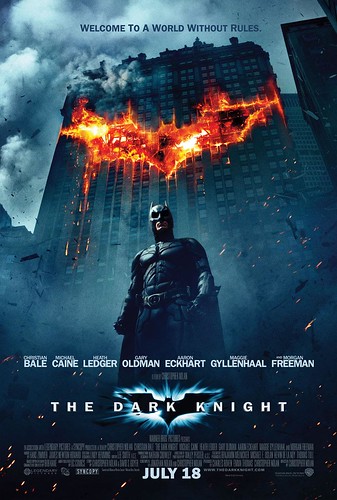 Wow. Just wow. And I thought Batman Begins was excellent. This... this piece of art... its PHENOMENAL!! From the scale, to the acting, the atmosphere, the music, the action, it's all art. I have not experienced this level of greatness in the cinema for a long time. This film is the darkest Batman, as well as one of the darkest, violent and gripping films, ever made.
I'll start off with the actors. Christian Bale has done a tremendous job as our beloved Caped Crusader, who has a flawed personality that hangs on the balance between righteous and crazy. His perception of justice causes an emotional and personal shift, whether he is a rich guy who fights crime in a suit or just a regular guy who is sick of all the injustice in Gotham City and decides to give the psychopaths a dose of their own medicine. Because of this, and Bale's tremendous acting, the Bruce Wayne character is justified, and we, the audience, emphasizes with Bale's flawed hero more than Michael Keaton, Val Kilmer, George (shudder) Clooney, Kevin Conroy, or God forbid Adam West, ever will. If there was an excellent Batman, this is the real deal. The theme of righteousness and insanity is played well with his character here.
But of course, the real star of the show is the late and great Heath Ledger, who steals almost every scene he's in as the villainous Joker. This Joker is not like the other renditions; he is the best. Downright evil, corrupt, insane, psychotic, terrifying. In every sense of those aforementioned words. More scary than funny, he shows audiences the Joker is undoubtedly Batman's most nefarious foe and his perfect nemesis, challenging him all the way. With a cynical smile, he proclaims in a scene where Batman is a freak to the public, like the Joker himself. This also explains the balance of righteousness that Bruce Wayne is going through. The Joker is downright evil, and Ledger makes this performance legendary. I agree with the critics, sign me up for the petition where he deserves a posthumous Oscar win.
The rest of the cast is excellent and star-studded. Aaron Eckhart does his Harvey Dent character justice, with a strong sense of righteousness up his sleeve, as well as Bruce Wayne's rival in love. His acting is strong here. Maggie Gylenhaal is a great replacement for Katie Holmes as Wayne's love interest Rachel Dawes, as she shows more sensitive and caring side towards Bruce, other than Holmes' nearly flat performance. Michael Caine as Bruce Wayne's loyal butler Alfred delivers, as well as Morgan Freeman as the CEO of Wayne Enterprises. Gary Oldman does an excellent portrayal of Lt. James Gordon, who aids Batman in his quest for justice. And a special mention goes to Eric Roberts as a crime lord, who surprisingly does a great acting job. The rest of the cast can take a bow, they can be proud of their being in this film.
The cinematography is possibly the most sublime scenes ever chosen. Gotham and Hong Kong are wide, and yet, there is this dark aura of crime and corruption all around them. It really blends in well with the film, giving it a distinct and unique look. Quite simply, this is the best Gotham city in any Batman rendition. Wally Pfister has done an excellent job.
To accompany the atmosphere is the tremendous music score by movie music maestros, James Newton Howard and Hans Zimmer. With talents like these, the score is unforgettable. It is dark and moody at times, and throbbing and glorious yet dark during the action sequences. It deserves an Oscar.
The very loyal screenplay is written very, very well by Jonathan Nolan (director's brother), who has done a masterful job. The characters are (pardon the pun) rich in character and the story has not a flaw in it. For a comic book film adaptation, this film is not at all fantasy-like. It is quite realistic in a way and this is what gives the film more credibility. Also, the fact that the script is realistic is unbelievable, as you expect a superhero film when you walk in the cinema, and walk out realizing you have just seen an epic crime saga. Yes, CRIME SAGA. It deserves to be mentioned in the same sentence with "GoodFellas", "Heat", "The Untouchables" and even "The Godfather". I kid you not, this film has the power. The fact that this is an epic is further proved by the film's length - 2 hours and 32 minutes. Yes, it's that long. But it goes by so fast because you end up wishing for more.
But of course, none of this is possible without the genius that is the other Nolan, director Christopher. As per Memento, he knows how to direct a film. The dramatic scenes are engaging and the action sequences are crisp, thrilling, and will blow you out of your seat. Nolan's direction is tense, whip-smart, kinetic and smart. All of the action sequences are realistic and "boombastic" and CGI is used only when necessary (Steve Spielberg and George Lucas, take note). The new vehicle and some gadgets look cool and stylish and do not take away the film's credibility and realism. There are a lot of action sequences to boot, some of them combining themes from above. You will have to see them to believe them. The brothers Nolan have done it again.
In short, it's a masterpiece. One that will knock you out of your seat. It is the best Batman film ever, the best superhero film ever and the best film of 2008 thus far. If there ever was a possibility of a summer film winning Best Picture at the Oscars (like Titanic and Lord Of The Rings), this will join their ranks. It is rightfully deserved. Do yourselves a favor and see this piece of art. Repeated viewings highly recommended.
Wow. Just wow. And I thought Batman Begins was excellent. This... this piece of art... its PHENOMENAL!! From the scale, to the acting, the atmosphere, the music, the action, it's all art. I have not experienced this level of greatness in the cinema for a long time. This film is the darkest Batman, as well as one of the darkest, violent and gripping films, ever made.
I'll start off with the actors. Christian Bale has done a tremendous job as our beloved Caped Crusader, who has a flawed personality that hangs on the balance between righteous and crazy. His perception of justice causes an emotional and personal shift, whether he is a rich guy who fights crime in a suit or just a regular guy who is sick of all the injustice in Gotham City and decides to give the psychopaths a dose of their own medicine. Because of this, and Bale's tremendous acting, the Bruce Wayne character is justified, and we, the audience, emphasizes with Bale's flawed hero more than Michael Keaton, Val Kilmer, George (shudder) Clooney, Kevin Conroy, or God forbid Adam West, ever will. If there was an excellent Batman, this is the real deal. The theme of righteousness and insanity is played well with his character here.
But of course, the real star of the show is the late and great Heath Ledger, who steals almost every scene he's in as the villainous Joker. This Joker is not like the other renditions; he is the best. Downright evil, corrupt, insane, psychotic, terrifying. In every sense of those aforementioned words. More scary than funny, he shows audiences the Joker is undoubtedly Batman's most nefarious foe and his perfect nemesis, challenging him all the way. With a cynical smile, he proclaims in a scene where Batman is a freak to the public, like the Joker himself. This also explains the balance of righteousness that Bruce Wayne is going through. The Joker is downright evil, and Ledger makes this performance legendary. I agree with the critics, sign me up for the petition where he deserves a posthumous Oscar win.
The rest of the cast is excellent and star-studded. Aaron Eckhart does his Harvey Dent character justice, with a strong sense of righteousness up his sleeve, as well as Bruce Wayne's rival in love. His acting is strong here. Maggie Gylenhaal is a great replacement for Katie Holmes as Wayne's love interest Rachel Dawes, as she shows more sensitive and caring side towards Bruce, other than Holmes' nearly flat performance. Michael Caine as Bruce Wayne's loyal butler Alfred delivers, as well as Morgan Freeman as the CEO of Wayne Enterprises. Gary Oldman does an excellent portrayal of Lt. James Gordon, who aids Batman in his quest for justice. And a special mention goes to Eric Roberts as a crime lord, who surprisingly does a great acting job. The rest of the cast can take a bow, they can be proud of their being in this film.
The cinematography is possibly the most sublime scenes ever chosen. Gotham and Hong Kong are wide, and yet, there is this dark aura of crime and corruption all around them. It really blends in well with the film, giving it a distinct and unique look. Quite simply, this is the best Gotham city in any Batman rendition. Wally Pfister has done an excellent job.
To accompany the atmosphere is the tremendous music score by movie music maestros, James Newton Howard and Hans Zimmer. With talents like these, the score is unforgettable. It is dark and moody at times, and throbbing and glorious yet dark during the action sequences. It deserves an Oscar.
The very loyal screenplay is written very, very well by Jonathan Nolan (director's brother), who has done a masterful job. The characters are (pardon the pun) rich in character and the story has not a flaw in it. For a comic book film adaptation, this film is not at all fantasy-like. It is quite realistic in a way and this is what gives the film more credibility. Also, the fact that the script is realistic is unbelievable, as you expect a superhero film when you walk in the cinema, and walk out realizing you have just seen an epic crime saga. Yes, CRIME SAGA. It deserves to be mentioned in the same sentence with "GoodFellas", "Heat", "The Untouchables" and even "The Godfather". I kid you not, this film has the power. The fact that this is an epic is further proved by the film's length - 2 hours and 32 minutes. Yes, it's that long. But it goes by so fast because you end up wishing for more.
But of course, none of this is possible without the genius that is the other Nolan, director Christopher. As per Memento, he knows how to direct a film. The dramatic scenes are engaging and the action sequences are crisp, thrilling, and will blow you out of your seat. Nolan's direction is tense, whip-smart, kinetic and smart. All of the action sequences are realistic and "boombastic" and CGI is used only when necessary (Steve Spielberg and George Lucas, take note). The new vehicle and some gadgets look cool and stylish and do not take away the film's credibility and realism. There are a lot of action sequences to boot, some of them combining themes from above. You will have to see them to believe them. The brothers Nolan have done it again.
In short, it's a masterpiece. One that will knock you out of your seat. It is the best Batman film ever, the best superhero film ever and the best film of 2008 thus far. If there ever was a possibility of a summer film winning Best Picture at the Oscars (like Titanic and Lord Of The Rings), this will join their ranks. It is rightfully deserved. Do yourselves a favor and see this piece of art. Repeated viewings highly recommended.
Critics on two movies I watch
 The Chronicles of Narnia: Prince Caspian, big blockbuster number three in the summer of 2008, now I expected this to be an exciting movie already, but I have to tell you that the excitement got so much higher as I watched this movie. I couldn't believe just how awesome this movie was, I mean the first Chronicles is a fantastic movie, but this movie takes a few steps ahead. It's definitely more mature, it takes on a lot of battle scenes, like a Lord of the Rings type of battle with a ton of creatures who are fighting for their land back. We have amazing effects, with taking badgers, goats, and mice, and the mice, this is no Puss in Boots from Shrek 2, this is the blood thirsty mice that kick butt! The Chronicles of Narnia: Prince Caspian is seriously one of the best films I have seen this year.
The movie begins where the first Chronicles left off, the kids are in England, pretty depressed and miss Narnia, it's been a year, but while in a train station, they are taken away back to Narnia where it's been 1300 years. The land is in bad shape, they have been called by Prince Caspian, the kids are these legends to the Narnians, but they need the kid's help. So everyone is in for a strong battle to get Narnia back into the beautiful land it once was. Lucy is hoping to re-connect with Aslan, but everyone does not believe as strong as she does.
The Chronicles of Narnia: Prince Caspian is a movie that will not disappoint, I cannot believe how good this movie was, I was so excited watching all these amazing battle sequences. The plot is actually pretty easy to follow, for kids that are under 10, I'm not so sure if this is a film for them, I know that The Chronicles of Narnia is a family film, but there is quite a bit of violence in the movie, like blood, cutting, decapitations. But for the effects, I would say this is safer than Lord of the Rings. Like I said before though, The Chronicles of Narnia: Prince Caspian is truly a winner, this is just a fantastic movie and is a must see.
The Chronicles of Narnia: Prince Caspian, big blockbuster number three in the summer of 2008, now I expected this to be an exciting movie already, but I have to tell you that the excitement got so much higher as I watched this movie. I couldn't believe just how awesome this movie was, I mean the first Chronicles is a fantastic movie, but this movie takes a few steps ahead. It's definitely more mature, it takes on a lot of battle scenes, like a Lord of the Rings type of battle with a ton of creatures who are fighting for their land back. We have amazing effects, with taking badgers, goats, and mice, and the mice, this is no Puss in Boots from Shrek 2, this is the blood thirsty mice that kick butt! The Chronicles of Narnia: Prince Caspian is seriously one of the best films I have seen this year.
The movie begins where the first Chronicles left off, the kids are in England, pretty depressed and miss Narnia, it's been a year, but while in a train station, they are taken away back to Narnia where it's been 1300 years. The land is in bad shape, they have been called by Prince Caspian, the kids are these legends to the Narnians, but they need the kid's help. So everyone is in for a strong battle to get Narnia back into the beautiful land it once was. Lucy is hoping to re-connect with Aslan, but everyone does not believe as strong as she does.
The Chronicles of Narnia: Prince Caspian is a movie that will not disappoint, I cannot believe how good this movie was, I was so excited watching all these amazing battle sequences. The plot is actually pretty easy to follow, for kids that are under 10, I'm not so sure if this is a film for them, I know that The Chronicles of Narnia is a family film, but there is quite a bit of violence in the movie, like blood, cutting, decapitations. But for the effects, I would say this is safer than Lord of the Rings. Like I said before though, The Chronicles of Narnia: Prince Caspian is truly a winner, this is just a fantastic movie and is a must see.
*******


A chaotic warehouse escape, nuclear explosions, jungle swashbuckling, man-eating ants, monkey men (almost too literally), and an ancient amazonian temple spectacle that is almost too strange to conceive. These are the makings of the long-awaited Indiana Jones installment, and as strange and twisted as the story is, it delivers.
Nineteen years have passed since we last saw our iconic archaeologist, and though looks have changed slightly and setting/time have changed quite a lot, Indy couldn't be any more Indy than he was before. After a narrow escape from a top-secret military compound in 1957 Nevada, Indy returns back to his normal life as a university professor at Marshall College, only to find out that he is on edge of losing his job. Into the story comes Mutt Williams (Shia LeBeouf), who has lost touch of his old friend and father-figure, professor Oxley (John Hurt). Indy, who's known Oxley since his own college years, agrees to go with Mutt to the Amazon to find him and discover the mysteries surrounding his obsession with the legend of the crystal skulls.
The same look, style, and attitude is nostalgic to the previous films every time you see Indy on screen, whether he's in a close-call escape, fighting one-on-one with a soviet thug, arguing with a mistrusting Mac (Ray Winstone) or the giddy Marion (Karen Allen), or just simply being professor Henry Jones, Jr. Marion Ravenwood returns to the screen, bringing not only her debating charm, but a few new surprises for Indy, as well. Newcomers to the series are the greaser Mutt, the delusional Professor Oxley, the deceptive Mac, and of course, the mysterious and intimidating femme fatale Irina Spalko (Cate Blanchett), each with their own unique personality that has Indy spinning in a whirlwind of problems.
There are plenty of action sequences (some FAR more ridiculous than others), but that is precisely what makes the adventure in any Indiana Jones film. That's what we want. And as for story, it's got the same mythical legend tale to tell that all the previous films had (as strange as it is). Many longtime Indy fans will also be very pleased at the numerous amounts of references are portrayed to the old films.
Overall, the movie may seem a bit over-the-top, and in many parts it is. But when you finish watching it and think about it, it's got that same style of storytelling as the previous films, subtle as it may be. It's imperative to realize the time and setting of the film. The original trilogy was closely knit together time-wise, spanning only three years between all three films. Now we are reentering Indy's life nineteen years down the road, and much has changed about his life and the world around him. So naturally, for that reason alone, this Indy film is going to FEEL different, but it's definitely heartwarming to know that Indy himself hasn't changed a bit, and that's truly what makes these films so adventurous and enjoyable.
A Nutshell Review: Iron Man
 With a little tinge of shame and regret, my rare dalliances with the Iron Man character stemmed from a few one off comic books, as well as occasions during the teenage years of spending time in the arcade with those Marvel games, where Iron Man was one of my preferred characters because it came together with his incredible arsenal of weapons from repulsor beams to this gigantic cannon which accompanied the execution of some complex combo moves. There's something sexy about the red and gold suit of armour, and having an array of weapons at the disposal of a player, makes perfect sense for variety in dispatching your enemies.
This may irk the fervent fans of Iron Man, but face it, the superhero belonged to Tier B where superheroes are concerned, languishing behind easily recognizable peers who already have movie after movie being made. But thanks to the advancement in digital technology, bringing Iron Man to life no longer consisted of the prospect and worrying thought of having a man running about in a rubber suit passing it off as metal, the way Ultraman would have been done, complete with mechanical clicks and whirrs as sound effects to try and fool the visual sensory. Here, we have a very detailed rendering of the entire design from scratch to final modification, and we're in at every step of the way, with many cheeky and sometimes a tad implausible scenes just for cheap laughs thrown in.
I thought Iron Man the story worked because of stark (pardon the pun) similarities with Batman Begins, also an origin story which took its time to dwell on the man behind the suit, nevermind at the sacrifice of having less action sequences, or by not giving the fans what they want through the showcase of more than the basic powers. Advanced capabilities can always find room in the sequel, and as the first movie used to establish its characters, I felt that it succeeded, given too that it had a cast of capables (just like Batman Begins had) to pull the movie through without resorting to over the top and campy performances, starting of course with the lead in Robert Downey Jr.
In a nutshell, Downey is Tony Stark through and through. His affinity for the character shines, and no doubt it bore some parallels between his own personal, and Stark's life in the narrative future when he hits the bottle. He was allowed to become a Two-Face of sorts, on one hand being and later acting out his flamboyance self whose mission in life was the continuation of his father's legacy of Stark Industries, a weapons conglomerate, versus his personal mission in ridding his own weapons from the hands of the bad guys, now updated to be freedom fighters in the Middle East. The dialogue contained within each scene of Stark's, except perhaps during captivity, is full of one-liners done in double quick time, you probably would think it boiled down to a whole host of natural ad-libbing.
But while Starks spends significant amount of time in his unsecured basement building his masterpiece, his human interaction come in the form of faithful secretary Pepper Potts (Gwyneth Paltrow) who actually, for the first time I admit, looked really good on screen as Stark's most trusted aide, bringing about some serious spark of sexual tension and chemistry between the two characters of opposite sex, more so than any other comic book movie I have seen. And good friend from the air force Jim Rhodes (Terrence Howard) complete the circle of trust who knows of Stark's secret identity, and you'd be keeping your fingers crossed at the toss of a teaser of a certain War Machine appearance should the sequel be out.
Who's the main villain in the movie? It points the finger at Corporations, or at least here, the weapons manufacturers and the shady deals that go through in the name of profit, the sole objective for any corporation's existence. And Jeff Bridges, in a rare villainous role, got to personify that greed and wrestle for absolute power just like the trailer already suggested. While his performance is refreshing as he disappears behind the ball head and bushy beard, you could see his motivation and how the plot would have been developed to introduced the ultimate fodder for Iron Man to duke it out in a, sad to say, ordinary finale which any audience would probably be able to stay a step ahead.
As mentioned earlier, there are plenty of similarities with the Dark Knight of Gotham in Christopher Nolan's reboot, but more so because of properties inherent with the likeness between Bruce Wayne and Tony Stark. Both are incredibly wealthy to devote time outside of the day job to pursue their "hobby", both have to suffer personal tragedies in order to wake up to the cruel world, and in the movie, both fall prey to the corporate raider type, spend time perfecting their suit of war, have assistants they would trust their lives with, and of course save them from impending doom, and a finales set at their facilities.
But Iron Man is still a special effects extravaganza offering a thrill ride especially when he goes into battle mode, and without a doubt, Robert Downey Jr probably should be credited for raising the profile of this once Tier-B character, to perhaps becoming more recognizable now, and obviously, expanding the fan base of this weaponry filled suit of metal, which of course, in this origin movie, we were only given a glimpse of its potential. can everyone now spell sequel and clamour for more please? Iron Man has set the bar for the other upcoming comic book movies to try and surpass this summer season!
With a little tinge of shame and regret, my rare dalliances with the Iron Man character stemmed from a few one off comic books, as well as occasions during the teenage years of spending time in the arcade with those Marvel games, where Iron Man was one of my preferred characters because it came together with his incredible arsenal of weapons from repulsor beams to this gigantic cannon which accompanied the execution of some complex combo moves. There's something sexy about the red and gold suit of armour, and having an array of weapons at the disposal of a player, makes perfect sense for variety in dispatching your enemies.
This may irk the fervent fans of Iron Man, but face it, the superhero belonged to Tier B where superheroes are concerned, languishing behind easily recognizable peers who already have movie after movie being made. But thanks to the advancement in digital technology, bringing Iron Man to life no longer consisted of the prospect and worrying thought of having a man running about in a rubber suit passing it off as metal, the way Ultraman would have been done, complete with mechanical clicks and whirrs as sound effects to try and fool the visual sensory. Here, we have a very detailed rendering of the entire design from scratch to final modification, and we're in at every step of the way, with many cheeky and sometimes a tad implausible scenes just for cheap laughs thrown in.
I thought Iron Man the story worked because of stark (pardon the pun) similarities with Batman Begins, also an origin story which took its time to dwell on the man behind the suit, nevermind at the sacrifice of having less action sequences, or by not giving the fans what they want through the showcase of more than the basic powers. Advanced capabilities can always find room in the sequel, and as the first movie used to establish its characters, I felt that it succeeded, given too that it had a cast of capables (just like Batman Begins had) to pull the movie through without resorting to over the top and campy performances, starting of course with the lead in Robert Downey Jr.
In a nutshell, Downey is Tony Stark through and through. His affinity for the character shines, and no doubt it bore some parallels between his own personal, and Stark's life in the narrative future when he hits the bottle. He was allowed to become a Two-Face of sorts, on one hand being and later acting out his flamboyance self whose mission in life was the continuation of his father's legacy of Stark Industries, a weapons conglomerate, versus his personal mission in ridding his own weapons from the hands of the bad guys, now updated to be freedom fighters in the Middle East. The dialogue contained within each scene of Stark's, except perhaps during captivity, is full of one-liners done in double quick time, you probably would think it boiled down to a whole host of natural ad-libbing.
But while Starks spends significant amount of time in his unsecured basement building his masterpiece, his human interaction come in the form of faithful secretary Pepper Potts (Gwyneth Paltrow) who actually, for the first time I admit, looked really good on screen as Stark's most trusted aide, bringing about some serious spark of sexual tension and chemistry between the two characters of opposite sex, more so than any other comic book movie I have seen. And good friend from the air force Jim Rhodes (Terrence Howard) complete the circle of trust who knows of Stark's secret identity, and you'd be keeping your fingers crossed at the toss of a teaser of a certain War Machine appearance should the sequel be out.
Who's the main villain in the movie? It points the finger at Corporations, or at least here, the weapons manufacturers and the shady deals that go through in the name of profit, the sole objective for any corporation's existence. And Jeff Bridges, in a rare villainous role, got to personify that greed and wrestle for absolute power just like the trailer already suggested. While his performance is refreshing as he disappears behind the ball head and bushy beard, you could see his motivation and how the plot would have been developed to introduced the ultimate fodder for Iron Man to duke it out in a, sad to say, ordinary finale which any audience would probably be able to stay a step ahead.
As mentioned earlier, there are plenty of similarities with the Dark Knight of Gotham in Christopher Nolan's reboot, but more so because of properties inherent with the likeness between Bruce Wayne and Tony Stark. Both are incredibly wealthy to devote time outside of the day job to pursue their "hobby", both have to suffer personal tragedies in order to wake up to the cruel world, and in the movie, both fall prey to the corporate raider type, spend time perfecting their suit of war, have assistants they would trust their lives with, and of course save them from impending doom, and a finales set at their facilities.
But Iron Man is still a special effects extravaganza offering a thrill ride especially when he goes into battle mode, and without a doubt, Robert Downey Jr probably should be credited for raising the profile of this once Tier-B character, to perhaps becoming more recognizable now, and obviously, expanding the fan base of this weaponry filled suit of metal, which of course, in this origin movie, we were only given a glimpse of its potential. can everyone now spell sequel and clamour for more please? Iron Man has set the bar for the other upcoming comic book movies to try and surpass this summer season!
Most Amazing Story
 Inspired by true events, THE CHILDREN OF HUANG SHI is a portrayal both sweeping and intimate of people who, thrown into an unexpected and desperate situation, discover their capacity for love and responsibility. It tells how a young Englishman, George Hogg came to lead sixty orphaned boys on an extraordinary journey of almost a thousand perilous miles across the snow-bound Liu Pan Shan mountains to safety on the edge of the Mongolian desert. And of how, in doing so, he came to understand the true meaning of courage. During his journey, Hogg learns to rely on the support of Chen, the leader of a Chinese partisan group who becomes his closest friend. He soon finds himself falling in love with Lee, a recklessly brave Australian adventurer whom war has turned into an unsentimental nurse on horseback. Along the way Hogg befriends Madame Wang, an aristocratic survivor who has also been displaced by war, who helps the young Englishman, his friends and their sixty war orphans make their way across awesome (and rarely filmed) mountain and desert regions to a place of safety near the western end of the Great Wall of China.
****
 George Hogg, an Archetypal Hero
"Hogg is a really loving father to me. Look at the last photo he had taken in 1945 when he held me in his arms. You can see deep paternal love on his face. Nothing could ever be greater than to give parental love to an orphan."
That is Nie Guangpei, one of the orphans looked after by Hogg, extends heartfelt thanks even when speaking these words today at an age of 69.
Hogg was born into a wealthy family in England. After finishing his college education at Oxford University, Hogg started his tour of the world. He came to war-haunted China in 1938. Hogg arrived in Shanghai right after the Japanese massacre of some 300,000 Chinese people in the nearby city of Nanjing. This drove him to work as an AP correspondent in Shanghai. Hogg was soon expelled by the Japanese, but he came back to China again via Korea.
In 1942, Hogg became a school headmaster in the small town in China's northwest Shaanxi Province, where he seemed to find his real home.
His students were mainly orphaned children. Some from local poor peasant families, and others were driven west from coastal cities by Japanese troops.
Nie Guangpei and his three elder brothers were among Hogg's students. As a three-year-old, Nie Guangpei could hardly remember the details of the war time, but he said he did not have many terrible memories thanks to Hogg's care and protection.
"He liked me very much. Maybe it is because I was the youngest child there. He always put me on his lap and read stories to me."
Hogg spent day and night with his students, who he felt were more like his children. He taught them English, literature, sports and technical skills.
As a head master, Hogg also built classrooms and dormitories, and he even set up factories to make money for the school's expenses.
However, their happiness in Shaanxi soon ended when the Japanese troops advanced westward. Hogg decided to escort the children hundreds of miles away to the safer place of Shandan in Gansu Province in northwestern China.
Nie Guangpei said it was a real trial for Hogg and his children to travel over 700 miles during the winter month of January.
"The older children had to overcome more difficulties than I did. Just imagine crossing mountains and deserts in such bad weather. Some of our carts toppled into valleys, and there was also the potential threat of bandits and the Japanese. You know, it is not very easy to cover that distance even by today's standards."
After Hogg and his students arrived at Shandan, they settled down in a ruined temple. After rebuilding the school and reopening their factories, everything seemed to be getting better. However, Hogg got tetanus after injuring his foot while playing basketball with his students. As a result of not receiving immediate medical treatment, Hogg soon died at the early age of 30.
His children, some of whom are still alive today, said that they have always held a deep love and respect for Hogg. What's more, Nie Guangpei said Hogg himself had personally developed during his short life in China.
"Hogg changed from a foreign visitor who knew little about China, to someone who developed a deep love and responsibility for this country. They all say there isn't a perfect man in this world, but Hogg was."
Hogg was buried in Shandan, and the Chinese government erected a statue for him in the 1980s to honour his contribution to China.
Hogg's story was unknown to many before it became a screenplay. Upon knowing of his existence, he now rightly deserves our respect for his devotion to China and his pursuit of justice.
Critics about J-Drama

Zettai Kabeshi (Absolutely Boyfriend)
Riiko Izawa is an office lady in search of a boyfriend, and she ends up in possession of a "robot" known as Night Tenjo, who is programmed to be the perfect boyfriend. However, this creates a love triangle with a distinguished young man at her company who also has feelings for her. Riiko will be played by Saki Aibu, Night will be played by Mokomichi Hayami, and Soshi Asamoto will be played by Hiro Mizushima.
This is nice drama which gives you a belittle romance. The girl I remember from Attention Please is quite charmer. The boy who plays robot boyfriend is very man-model like. He's look like Ken Barbie Doll hehe. Another boy who is Riiko's childhood friend from Hana Kimi is cuter than his previous acting. I like him better now than Hana Kimi.
Guys, please watch this and you will love it.
Subscribe to:
Posts (Atom)


 Posts
Posts


